
The Decision That Took Ten Seconds
I spent weeks planning the perfect five-day fast. I mapped out scenarios: which days would work best, when I could afford to be low-energy, how to schedule around soccer games and gym sessions. I wanted the final days to fall on lighter, less physical days since I didn't know how my body would respond.
But the perfect window never came. There was always a dinner plan, a social event, a reason to delay.
Then one Tuesday night, right after dinner, I just decided: I'm starting now. No grand preparation. No meal-prepping bone broth in advance. Just a decision. I had no idea how long I'd last. Maybe until breakfast. Maybe longer.
Sometimes the best plan is no plan at all. Analysis paralysis kills more goals than failure ever does.
Why Would Anyone Do This?
The research is compelling. Fasting triggers autophagy — your body's built-in recycling system that clears out damaged cells and regenerates new ones. It can improve insulin sensitivity, reduce inflammation, and give your digestive system a genuine rest. Studies on extended fasting have shown benefits for metabolic health, cognitive function, and even longevity markers.
But beyond the science, I had a simpler question: what am I capable of?
As a software engineer, I don't do hard physical labour. I walk about 5 km daily, play community soccer twice a week, and hit the gym a few times. My life is comfortable. I wanted to test my limits in a way that was uncomfortable but controlled.
A year earlier, I'd completed a 72-hour fast — three full days without food. It was tough but manageable. This time, the target was five days. 120 hours.
Day 1: The Familiar Enemy
The first morning was easy. I went to the gym, had a normal session, felt fine. Went to work, had a black coffee. Business as usual.
Then 3 p.m. hit.
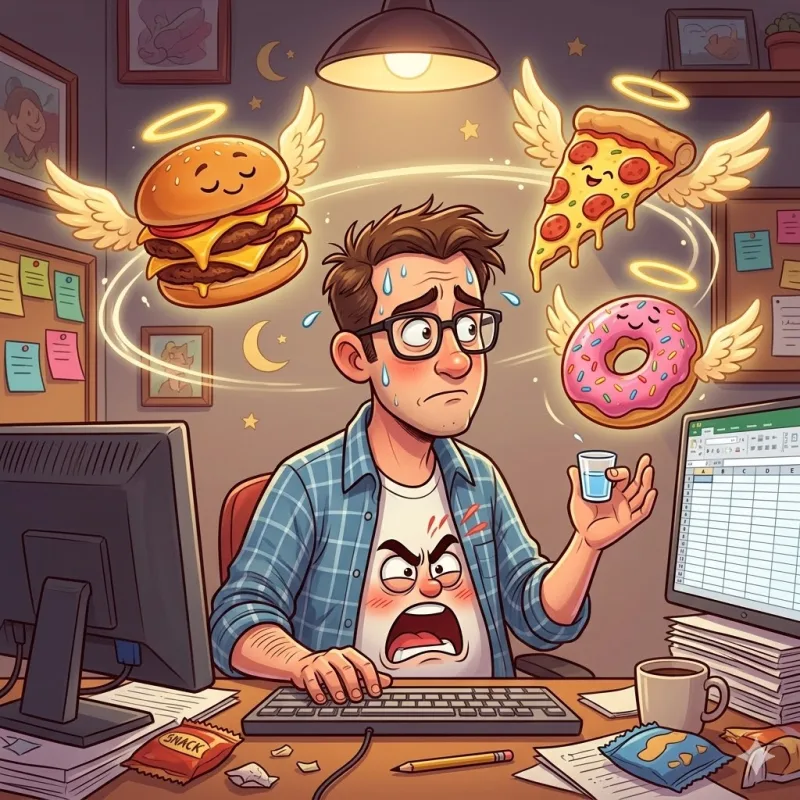
If you've ever fasted, you know this hour. Your stomach doesn't just growl — it argues. It sends increasingly dramatic signals to your brain, each one louder than the last. Your focus shatters. You start negotiating: just a small snack, just something to take the edge off.
But I'd been here before. I knew from my 72-hour fast that the first 24 hours are the hardest. Your body is still expecting food on schedule. It hasn't switched fuel sources yet. The hunger isn't a signal that you need food — it's a habit, a clock your stomach has been trained to follow.
I stayed composed, went for a 5 km walk with my wife in the afternoon, and went to bed. Day one: survived.
Day 2: The Shift
Something changes on day two. Your body begins transitioning from burning glucose to burning fat — a metabolic state called ketosis. The process isn't instant; it typically takes 24–48 hours for glycogen stores to deplete enough for your liver to start producing ketones as an alternative fuel source.
I went to the gym again. The workout wasn't as strong as usual, but I could still perform. I went to work. No issues. And then I noticed something unexpected.
Lunchtime came, and I didn't have to think about it. No scrolling through delivery apps. No debating between the salad I should eat and the burger I wanted. No walking to the kitchen. I just... kept working.
One less problem to deal with. That's how I joked about it at first. But the joke kept getting more serious.
Days 3–4: The Quiet
By day three, the hunger was largely gone. Ketones are a remarkably efficient fuel for your brain, and I experienced the heightened mental clarity that many people report during extended fasts.
I had more focus at work. Deeper focus. The kind where you look up and two hours have passed and you've written clean, thoughtful code without once checking your phone. Stable blood sugar means no post-lunch energy crashes. But it was more than biology.
Think about how much mental energy food consumes in a normal day. What should I eat for breakfast? Is this healthy? Should I meal prep? What's for lunch? Should we cook tonight or order in? Will this undo my gym session? The decision tree is enormous, and it branches constantly.
Remove it entirely, and it felt like someone had closed twenty background tabs in my brain.
My coworkers noticed the physical changes before I did. They pointed out I was walking more slowly than usual. I preferred staying in one spot rather than moving around. If I needed to summon energy, I could — but my body's default mode had shifted to conservation.
Day 5: The Turning Point
By the final day, my body had stopped asking for food. Not in a struggling, white-knuckling way. It had genuinely adapted. As if my system had accepted the situation and decided, alright, this person isn't going to feed me. I'll manage.
My sleep had been noticeably better throughout the fast — likely because my body wasn't spending energy on digestion at night. And I'd developed an odd, heightened awareness of my body. When I drank water, I could feel it travelling down, a cool sensation tracing a path through my chest and into my stomach. Your senses sharpen when there's less noise to process.
At the end of day five, I felt like I could keep going. My body was stable. My mind was clear. But I chose to stop.
I'd researched this beforehand: beyond 120 hours, the incremental benefits diminish. More importantly, extended fasting beyond five days can start to break down muscle protein for energy, which would undermine the gym work I'd been putting in. And honestly? I wanted to save something for next time.
Almost everything is better when you know when to quit. Fasting included.
The Thing Nobody Talks About
Here's the part that surprised me most, and it had nothing to do with weight loss or metabolism.
When lunchtime came at work, I no longer needed to eat. But I still went to the lunch area. I sat with my coworkers. I talked, laughed, listened to their stories — all while they ate and I drank water.
And I realised something: I enjoyed it more.
Not in a smug, fasting-superiority way. I mean that without the distraction of food — choosing it, eating it, thinking about it — I was fully present in the conversation. I was actually listening. I was connecting.
I'd always thought of these lunch chats as a pleasant side effect of eating. The food was the main event; the conversation was the bonus. But stripping away the food revealed the truth: the connection was the point all along. The food was incidental.

The same thing happened at home. During dinner time, I'd sit with my wife and chat. I'd call my parents on WhatsApp. The rituals continued — just without the eating. And they were just as good.
We structure so much of our social lives around meals. Business lunches. Coffee catch-ups. Family dinners. Date nights at restaurants. We assume the food is what brings us together. But maybe it's just the excuse we use to do what we actually need: sit across from another human being and be present.
Coming Back
Breaking an extended fast is almost as important as the fast itself. After five days without food, your digestive system has essentially powered down. Your stomach has reduced its acid production, your gut enzymes are at minimal levels, and your intestinal lining needs to reactivate. Eating a heavy meal immediately could cause refeeding syndrome — a dangerous shift in electrolytes — or at minimum, serious digestive discomfort.
I broke my fast on the evening of day five with chicken broth and a few pieces of watermelon. Light, hydrating, easy to digest. The next morning: a smoothie. Lunch: a light salad. Each meal was a gradual step up, giving my digestive system time to come back online. Within two or three days, I was eating normally again.
But something had shifted. That first spoon of chicken broth — I felt it all the way down. The warmth tracing from my mouth through my chest into my stomach. I wanted more. Not out of hunger, but out of gratitude. Every flavour felt vivid, deliberate, like tasting something for the first time.

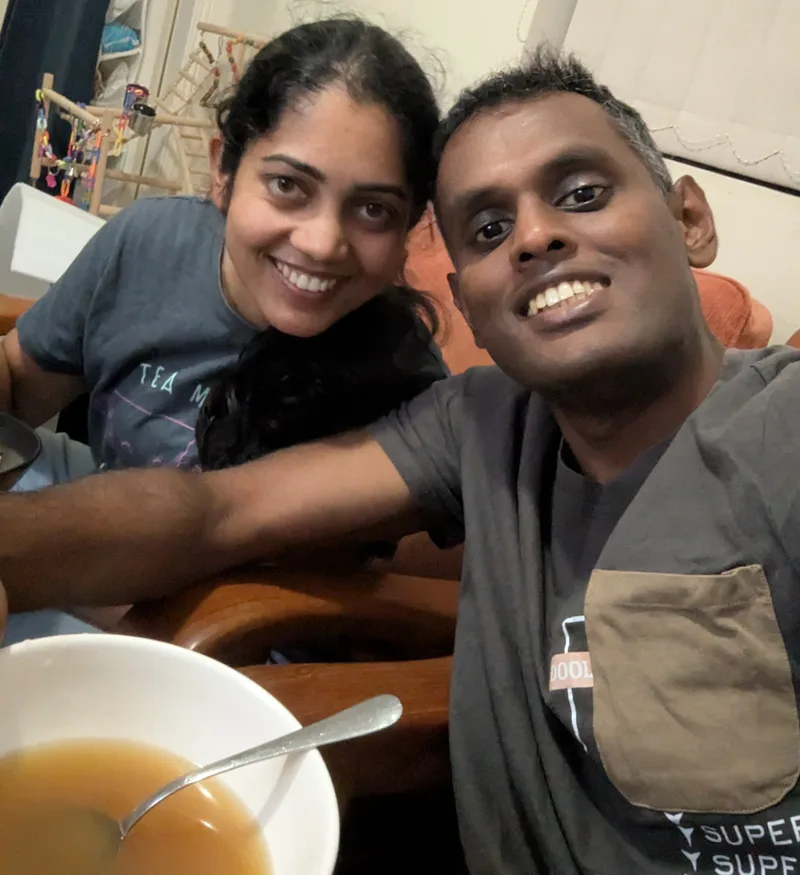
The real version. Day 5, evening.
Before the fast, I was a picky eater. I had my preferences — mostly non-veg, specific dishes, specific restaurants. I think that's what happens when food is always abundant: you narrow your choices because you can afford to. But five days of nothing resets that entirely. Suddenly every kind of food felt like a gift. Vegetables I'd normally skip, dishes I'd have scrolled past on a menu — I wanted to try all of it. The pickiness wasn't gone because I'd forced myself to change. It was gone because I finally appreciated what I'd been taking for granted.
By the end, I'd lost about 4–5 kg. I should be honest: most of that was water weight and glycogen, not fat. When you stop eating carbohydrates, your body burns through its glycogen stores, and each gram of glycogen is stored with about 3 grams of water. The weight comes back quickly once you resume eating. The real benefits of an extended fast are metabolic and cellular, not visible on the scale.
What 120 Hours Taught Me
The human body is extraordinary. Too hot? You sweat. Too cold? You shiver. Infected? Your body raises its temperature. No food? It switches fuel sources, conserves energy, and keeps you functioning. Most of us never get to appreciate these systems because we never push past our comfort zone.
Food takes up more mental space than we realise. The cognitive load of eating — planning, deciding, preparing, eating, cleaning up, feeling guilty, feeling satisfied — is constant background noise. Removing it, even temporarily, is like stepping out of a busy street into a quiet room.
Connection is the main course. Everything we think we're doing "over food" is actually about the people across the table. The meal is the medium, not the message.
Abundance breeds pickiness. When food is always available, you narrow your choices because you can. Take it away and bring it back, and suddenly everything tastes extraordinary. Gratitude isn't a mindset you can think your way into — sometimes you have to feel the absence first.
Starting is the hardest part. I spent weeks planning and never started. Then I started without planning and finished. The lesson isn't "don't plan." It's that at some point, planning becomes procrastination. You have to leap.
Knowing when to stop is its own skill. I could have pushed to six or seven days. But the research told me the returns were diminishing, and my instincts told me I'd proved what I needed to prove. Discipline isn't just about endurance — it's about restraint.
Would I Do It Again?
In a heartbeat.
Not for the weight loss (which is temporary) or the "detox" (which is oversimplified). But for the clarity. For the reminder that I'm capable of more than I think. For the strange, peaceful feeling of simplifying life down to its essentials and discovering that what's left — connection, focus, self-knowledge — is more than enough.
Do I recommend it? With caveats. Extended fasting isn't for everyone. If you have a history of disordered eating, are pregnant or nursing, have diabetes, or take medications that require food, this is not for you. If you're healthy and curious, start small — try 24 hours, then 48, then 72. Listen to your body. And please, consult a healthcare professional before attempting anything beyond a standard intermittent fast.
But if you can do it safely? You might be surprised by what you learn. Not about fasting. About yourself.
The People Behind the Fast
To my wife, Chathu — thank you. You were there every single day, checking on me, making sure I was okay, never once making me feel like what I was doing was strange or reckless. You walked with me, talked with me, and sat across from me at dinner even when my plate was empty. You didn't just support this — you made it possible. I could push my limits because I knew you were watching over them.
To my colleagues at work — thank you for noticing. For asking if I was alright. For telling me I was walking slower before I even realised it myself. For letting me sit with you at lunch and be part of the conversation even when I wasn't sharing the meal. You reminded me, without even trying, that showing up for people is what matters most.
And to everyone who has done this before me, studied it, written about it, and shared their experiences online — thank you. You gave me the courage to try something that most people would never attempt. Every article I read, every video I watched, every person who shared their story planted a small seed that eventually became the thought: maybe I can do this too.
Because that's how it works, isn't it? Someone does something and talks about it. Someone else reads it and thinks, if they can, maybe I can. And then they do. And then they write about it. And the cycle continues.
So if my story reaches even one person who's been thinking about testing their limits — with fasting or anything else — and it tips them from planning into doing, then this was worth writing.
We think food is the thing that brings us together. But strip it away, and you find something better underneath: the simple act of being present with another person.
Disclaimer: This is a personal account, not medical advice. Extended fasting carries real risks including electrolyte imbalances, muscle loss, and refeeding complications. Always consult a qualified healthcare professional before attempting any extended fast.