Embarking on a teaching journey in a university setting has been one of the most rewarding experiences of my life. It's a challenging, exciting role that always keeps you on your toes. In this blog post, I'll share some of the most important lessons I've learned along the way. I've come to see that teaching is not just about imparting knowledge; it's also about personal growth, adapting to change, and, most of all, the satisfaction of seeing your students succeed. So, whether you're a seasoned educator, an aspiring teacher, or simply curious about what goes on behind the scenes in a university classroom, I invite you to delve into my world of teaching.
"Teaching is an art easy to start but hard to master. Each time I taught, I unlocked a new skill or learnt new things myself."
Teaching is a Marathon, Not a Sprint
Teaching is an art, easy to start but hard to master. I spent almost eight semesters teaching the same content over and over to students. Yet, each time I taught, I unlocked a new skill or learned something new.
During my initial tutorials, I primarily relied on whiteboard notes. However, I evolved my teaching style into a more interactive format by the next semester. I began to facilitate discussions, encouraging students to express their initial ideas. Refining their thoughts or subtly correcting misconceptions yielded far better results than simply bombarding them with information from the tutorial reference materials.
I experimented with replacing text-heavy explanations with visual aids like flowcharts and diagrams, engaging students from start to end. I began mapping technical concepts into real-world analogies. For instance, when students grappled with the concepts of IP addresses and ports, I suggested they imagine the IP address as their home address, guiding the flow of mail (or data) from the internet. I likened the port number to different doors in their homes, each leading to a separate room. As specific doors lead to particular rooms, other port numbers are designated for various internet tasks.

The COVID-19 pandemic posed an unforeseen challenge, abruptly shifting all teaching to an online platform. Navigating this uncharted territory was a learning curve for everyone. During this period, I discovered how to leverage technology to enhance teaching effectiveness - from setting up online meetings, delivering pre-recorded content, and accommodating students in different time zones, to keeping students engaged from the start to the end of a session.
Sometimes, You Must Switch Roles
Being a teacher often means wearing many hats - not only must you be a lecturer, but sometimes you need to step into your students' shoes. Understanding their perspective is crucial for recognising gaps in their knowledge, allowing you to target your teaching to fill these gaps before introducing new content.
Solving problems collaboratively as a group tends to be more effective than merely demonstrating solutions. This practice encourages students to think critically, engage in discussion, and learn from their peers. They begin to understand the problem-solving process rather than just focusing on the solution.
In the early days, I was consumed by the conventional role of the tutor. I was so focused on being the most knowledgeable person in the room that I overlooked the power of learning alongside my students. But, with time, I realised that teaching is not just about being an authority but also about facilitating and nurturing an environment that encourages active learning and curiosity.
This led me to often switch roles and become another student in the class. By teaming up with students and approaching problems from their viewpoints, I could demystify complex concepts and make learning more relatable. This role-switching approach yielded remarkable results. It improved my teaching effectiveness and allowed me to empathise with my students' challenges. This, in turn, boosted their confidence in tackling problems and promoted a sense of camaraderie in the classroom.
By switching roles, I also discovered that I could serve as a model for my students, showing them how to approach learning with enthusiasm, humility, and persistence. By demonstrating that it's okay to make mistakes and that learning is an ongoing process, I could encourage them to take risks, ask questions, and strive for understanding over mere memorization. This experience of switching roles has enriched my teaching practice immensely, fostering a more engaging, inclusive, and interactive learning environment. It's a reminder that a teacher's role is fluid, adaptable, and should be responsive to the needs and experiences of the students.
You Don't Know Everything; Accept It
Initially, I felt compelled to be the most knowledgeable person in the room. However, I soon realized that this isn't always feasible. Different people perceive problems from diverse perspectives, and to answer their questions effectively, one must thoroughly understand the concept from various angles.
After the first few sessions, I realized that the tutor's reference materials wouldn't be enough to answer all the queries. This pushed me to broaden my horizons - I started to read more, delve deeper into research, and reflect more on the concepts I was teaching.
Admitting that I didn't know the answer to a question in front of a student was initially challenging. I worried that acknowledging my limitations would shatter my reputation and my students wouldn't trust me. I considered ignoring the question or bluffing with what I already knew, but I soon realized the importance of honesty.
"Admitting you don't know something isn't a sign of weakness; it's an opportunity for learning and growth."
Over time, I found the courage to admit I didn't know something. I learned that it was better to give a thoroughly researched and correct answer later rather than a potentially incorrect answer at the moment. From then on, I never hesitated to say, "I don't know the answer now, but I'll research it and get back to you."
This practice led me to delve deeper into topics after class, further enhancing my understanding of the subject. To my surprise, this honesty bolstered my reputation among my students. They began to trust me more, knowing that I was committed to providing them with accurate information, even if it meant admitting my initial ignorance. In the process, my understanding of the subject matter also significantly broadened.
By accepting that I don't know everything, I was able to create a more authentic, trusting, and open learning environment for my students and myself.

Leave No One Behind; Life is Not Fair for Everyone
During my tenure at the university, I had the privilege of teaching students from all walks of life, from different corners of the world, varying in age from their early twenties to late forties. Both postgraduates and undergraduates sat in my classes, each with a unique background and individual life journey.
What stood out to me was the stark realization that we often have no idea about the personal battles each student is fighting. I encountered students with exceptional talents who were grappling with English communication, students who were juggling multiple jobs to fund their studies, and students transitioning from non-technical backgrounds. I met students too shy to ask questions and others who would challenge me over half a point for 30 minutes in a two-hour session.
As a tutor, I learned the importance of an open mind and an empathetic heart. It was vital for me to make unbiased decisions within the boundaries of my role while also providing necessary support to those who needed it. Sometimes, a slight push, a gentle nudge in the right direction, can ignite a spark in a student that has the potential to transform their lives and, by extension, an entire generation.
This journey taught me how to treat everyone equally while assisting those who needed more. Ultimately, the most powerful lesson was that we must strive to ensure that no student is left behind because life isn't fair for everyone. We are still determining where our students might end up. Still, our goal as educators should be to equip them with the tools and confidence they need to face whatever the future holds.
You Need to Be an Entertainer as Well as a Manager
There's a famous saying, "If you want to make everyone happy, sell ice cream." However, this philosophy doesn't directly apply to teaching. In this role, you must find ways to entertain and engage your students while navigating complex subjects that can sometimes be difficult to digest.
Finding the right balance in teaching is a challenging task. If you dwell too much on basic concepts, you risk boring those with prior knowledge of the subject. Conversely, moving too swiftly into advanced topics can overwhelm those with less background knowledge, causing them to disengage or even drop out of the class.
"Teaching is a balance between entertainment and management, striking that balance is the key to engaging all your students."
Despite these challenges, maintaining this balance isn't impossible. For example, I found ways to engage more advanced students in discussions and problem-solving, allowing them to demonstrate their understanding and thereby giving less proficient students a chance to learn from them. Additionally, I dedicated extra time after classes to help those who were struggling to catch up.
My main goal wasn't to stick strictly to the two-hour limit for which I was paid but to ensure that each student left the class having gained some knowledge. To achieve this, I had to embrace both the roles of an entertainer and a manager. As an entertainer, I worked on making my lessons engaging and interactive. At the same time, as a manager, I focused on maintaining a productive learning environment that catered to all students, regardless of their starting point.

Be Nice to Everyone, But Know Your Limits
Teaching is a challenging endeavour, and marking even more so. As an educator, you carry a great responsibility because your decisions can significantly influence students' futures.
In my initial sessions, I fell into the trap of being overly generous with grades. I wanted to be friendly and encourage everyone, so I awarded maximum marks across the board. However, I soon realized that this approach needed to be more effectively fulfilling my tutor role. While being kind and supportive is crucial, it's equally important to appreciate and recognize the hard work of students who strive to achieve higher grades. Incorporating this change brought about a surprising shift. It encouraged other students to put in more effort because they now had a standard to aim for, a metaphorical wall to climb to attain higher marks.But being friendly and encouraging doesn't equate to overlooking the importance of professionalism in your relationships with students. While being friendly and approachable is vital for creating a positive learning environment, establishing boundaries is equally critical.
Sometimes, students would try to negotiate grades or ask for special favours outside the academic realm. I had to draw a line to maintain a healthy teacher-student relationship in such instances. I strived to ensure that my decisions were fair, transparent and respected the boundaries of professionalism.
In conclusion, being nice doesn't mean lowering the bar; instead, it's about creating an environment where hard work is recognized, and the teacher-student relationship is built on respect, fairness, and clear boundaries. Through my journey, I learned the delicate art of balancing kindness and firmness, both crucial aspects of effective teaching.
"Embrace the opportunity to teach, it's not just a job, it's a mission of great significance that brings deep and lasting satisfaction."
You Never Achieve This Satisfaction by Doing Any Other Job
My mother, a seasoned teacher of many years, experienced a severe stroke in 2009. It resulted in a lengthy stay in ICU, two major surgeries, and a difficult recovery period where she temporarily lost her ability to communicate and move independently.
Despite the severity of her experience, once she recovered, her immediate desire was to return to school and continue teaching. I was taken aback. Why not retire, especially after giving three decades to education and going through such a life-altering event? However, she insisted, returning to school just a month after her recovery.
The answer to my puzzlement came a decade later when I became a teacher. It's not merely the job; it's the deep sense of satisfaction that comes with it. Writing 100 lines of code or completing another task doesn't come close to the fulfilment I feel when I see my students grasp a concept or achieve their goals. The realization that I played a part in their success is beyond rewarding.
Teaching is a profession that genuinely tests every facet of your character and abilities. It pushes your creativity, patience, teamwork, decision-making, analytical skills, time management, and adaptability. It hones your public speaking ability and enhances your understanding of human nature. It's an immersive experience that leaves little room for monotony.
There is an undeniable magic in knowing you have the power to enlighten someone and potentially change their life trajectory. When you become a teacher, you seldom wake up in the morning lamenting that you must go to work. Instead, you look forward to the fulfilling journey that awaits you each day. It's an ongoing adventure that brings unparalleled satisfaction and a sense of purpose that is hard to find in any other profession.
Final Thought
In retrospect, it is a privilege to have taken up the mantle of a teacher. This journey allowed me to interact with diverse individuals, addressing anywhere from 20 to 50 people daily. Such an environment spurred the rapid enhancement of my teaching, language, and soft skills, among other abilities.I learnt valuable lessons about working harmoniously with others, respecting varying perspectives, and providing constructive feedback without inciting conflict. This experience has enriched me both personally and professionally.
Teaching may not be a proverbial 'cash cow,' but the satisfaction it yields is unparalleled and irreplaceable. The joy of sharing knowledge and seeing the fruits of your labour reflected in your students' growth is a reward. It's not merely a profession; it's a journey of continuous learning and development, a service that moulds the future.
"Being a teacher is about nurturing growth, not just in your students, but also within yourself."
If you ever have the opportunity to teach, embrace it wholeheartedly. Seem the chance, whether it's an impromptu lesson or a formal class. You'll impart knowledge and contribute to shaping a brighter future for the learners and, ultimately, society. Teaching is not just a job; it's a mission of great significance that brings deep and lasting satisfaction.
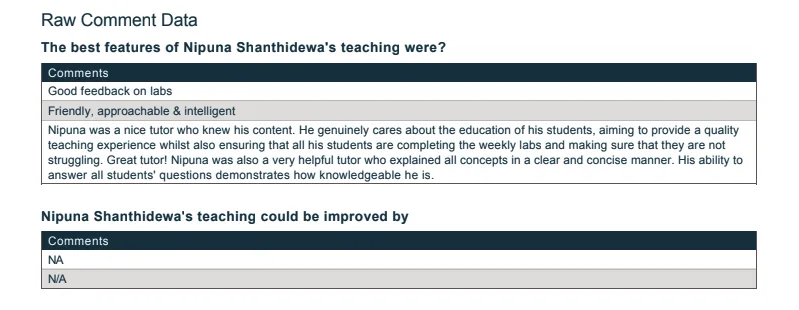
What I Truly Earned: Voices from My Students